Case study
Transactional FX Service Blueprinting
What if you could see employees’ whole Transaction FX journey and pinpoint exactly where it breaks?
The challenge
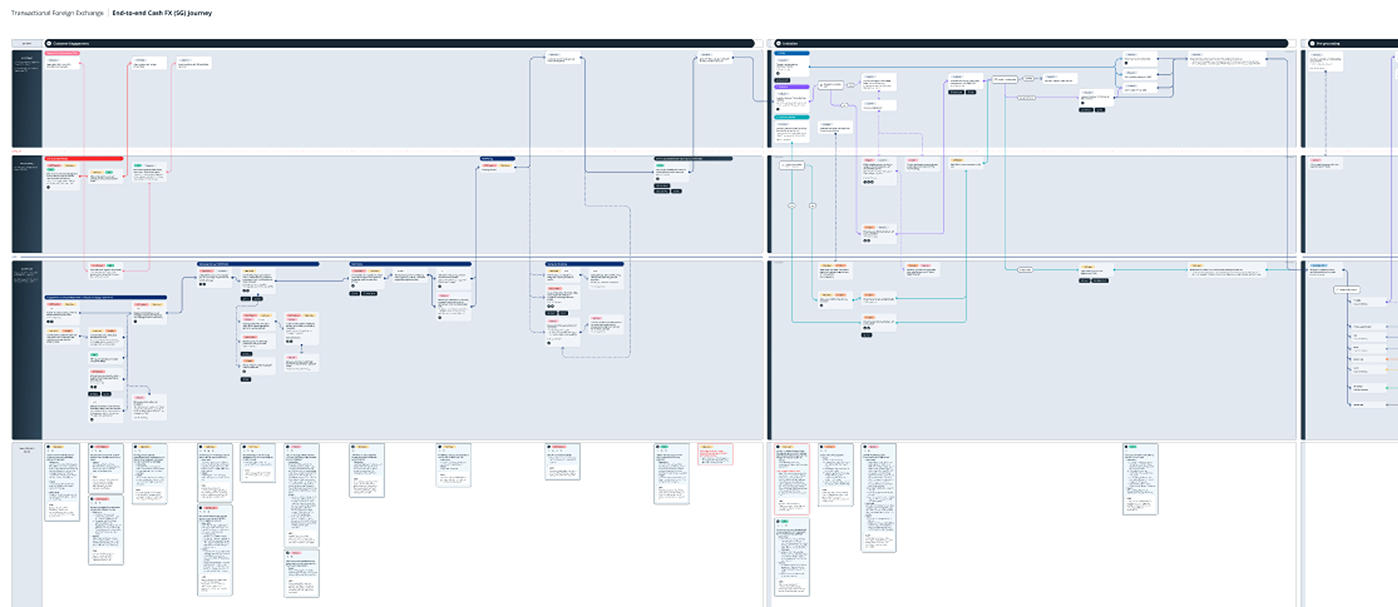
Transaction FX (TFX) products involve multiple different teams and platforms—both digital and offline. Employees involved in the product journey were experiencing gaps and inefficiencies, but the bank as yet did not have a holistic view of what this journey looked like today.
We were hence engaged to conduct research to be able to map out this journey, and to identify what these issues were, in order to improve the employee experience and drive productivity.
The process
Discover
- Material review
- Draft end-to-end journey map
- User personas
Define
- Validation workshops
- Prioritisation workshops
- Service blueprinting
Deliver
- Service blueprint
- Pain point prioritisation
1 · Discover
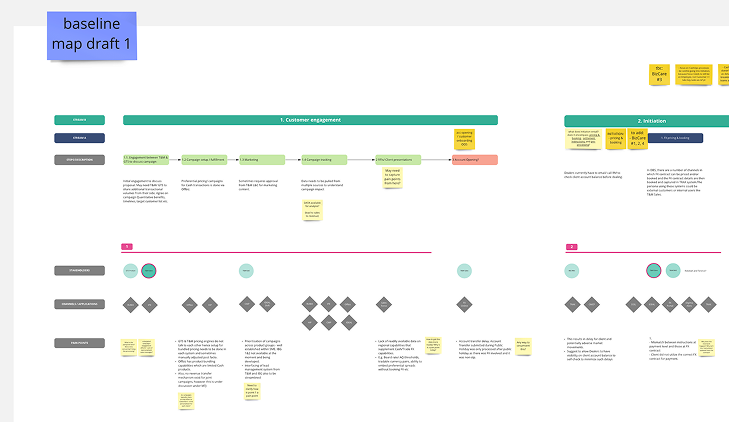
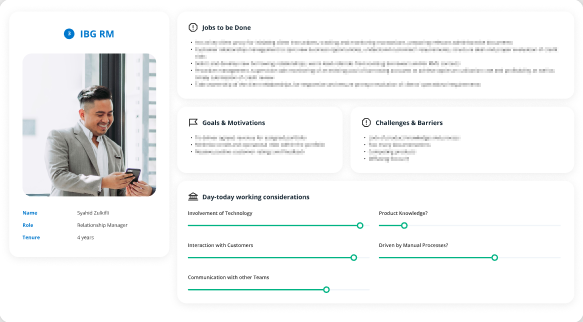
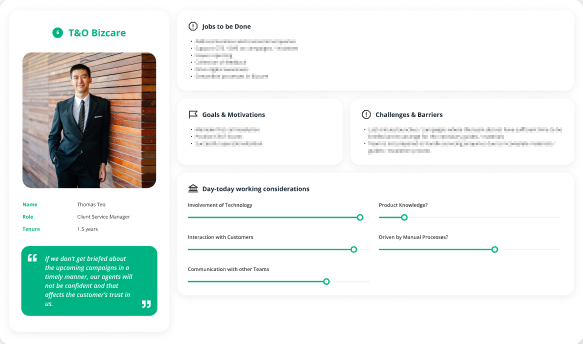
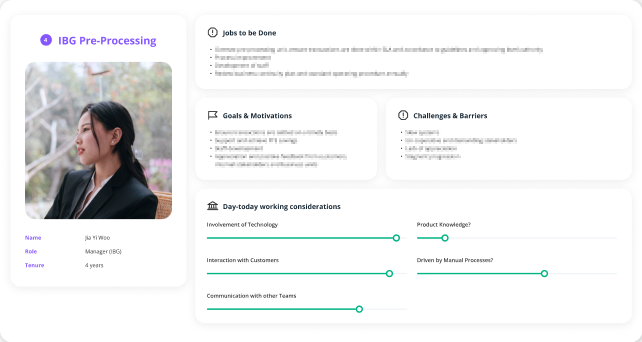
I began by reviewing the materials provided by the client, from which I drafted a baseline end-to-end journey map, as well as 7 user personas representing the different teams that were involved in the transactional FX process.
2 · Define
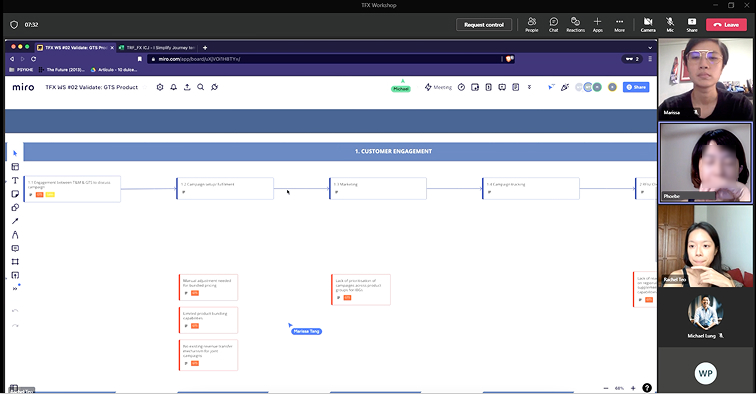
We ran virtual workshops with the 7 different teams, in order to validate and refine the baseline journey map, and to identify where exactly the pain points arose for them.
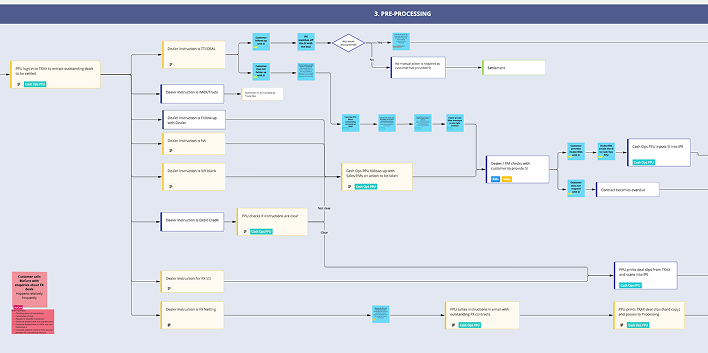
This led directly to the creation of the holistic service blueprint, that enabled a detailed view of the steps involved in the TFX journey, which teams and platforms were involved, and where the pain points were experienced.
After synthesising all these insights, we brought the different teams together to run a prioritisation workshop, which we felt was important for a clear and consistent understanding of the key issues experienced across the teams.
Some key pain points
Different teams’ systems do not talk to each other
Manual and separate setup on pricing systems leads to double effort and longer time to market.
Manual tracking and follow-up required on missing settlement instructions (SI)
Contracts can be booked by customer even if the SI is blank, leading to manual toil for staff.
Settlements are approved despite lack of client account balance
Due to lack of visibility across teams. Dealers hence have to check in with RMs each time.
The upshot
It was very gratifying that two months after our engagement for the project had ended, the client’s in-house design team came back to us to ask if we could take them through our project process and service blueprint, as they felt it could be useful for some enhancements they were working on.