Case study
Technology Workbench
What if tech engineers at a large regional bank could complete all their tasks from a single platform?
The challenge
The tech engineers at DBS, a large multinational bank, had to access multiple different systems and platforms in their daily work. This led to frustration with manual toil, a lack of focus, and time wasted in context switching.
The process
Discover
- Material review
- contextual inquiries
Define
- Validation workshops
- prioritisation workshop
Develop
- Ideation workshops
- solution prioritisation
- sprint planning
Deliver
- Design outputs
- development handoff
1 · Discover
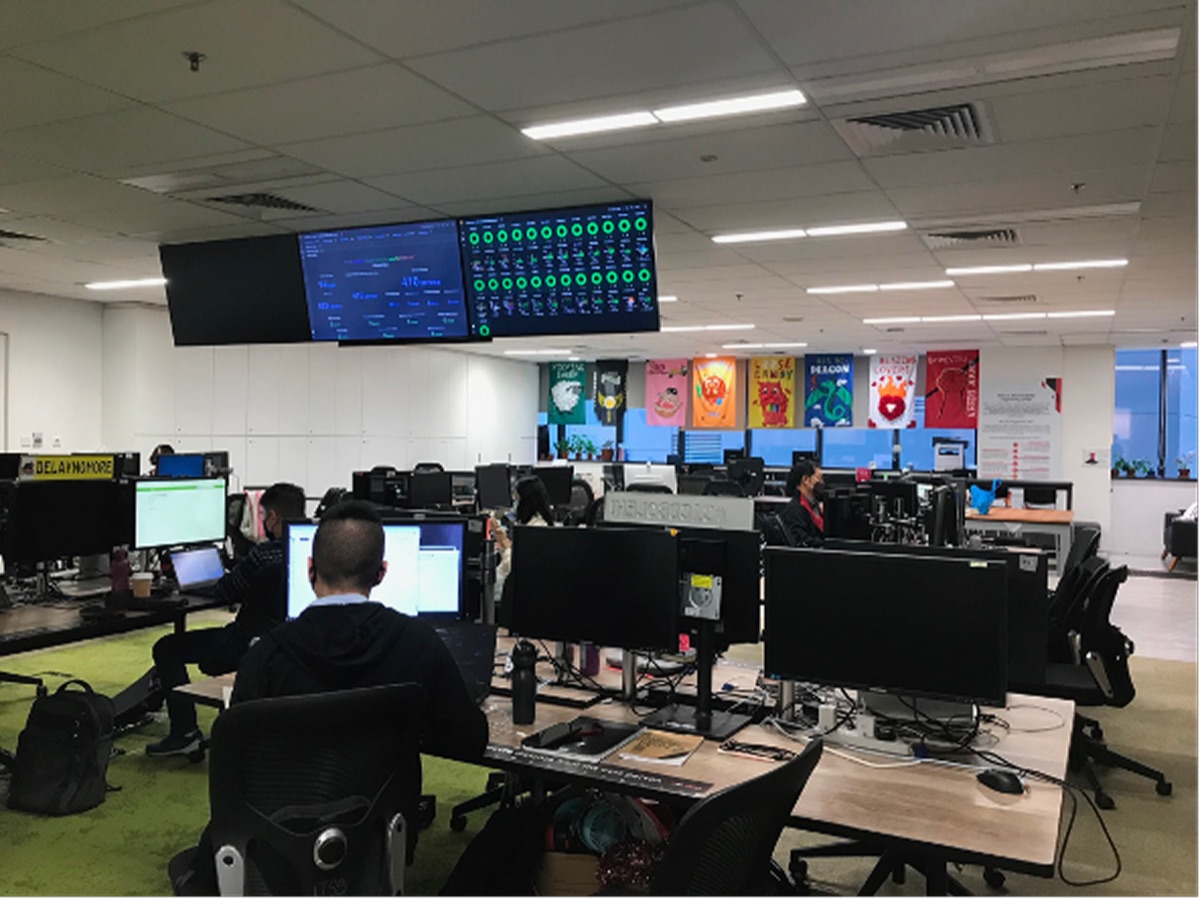
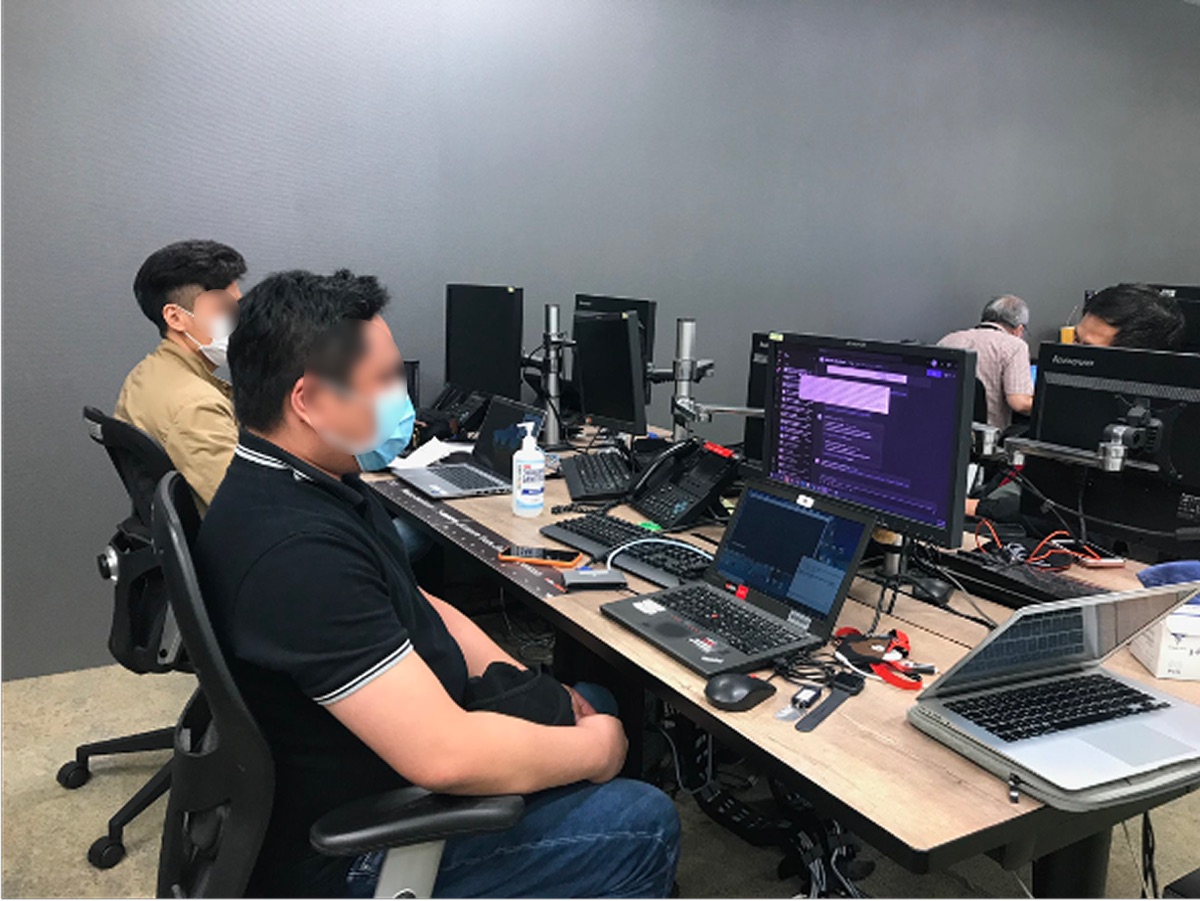
I supplemented a material review of IT engineers’ end-to-end journeys with contextual inquiries with 3 engineers, to get a real sense of what a typical journey looks like for them, from the time they receive and triage a ticket, perform root cause analysis, to the resolution of the ticket, and beyond.
What we discovered
Too many different systems with different entry points
Engineers needed to access many different platforms to address a single ticket, resulting in toil.
Lack of clarity on which team tickets should be transferred to
Difficulty in ascertaining the appropriate team to transfer a ticket to, either due to lack of information or complexity of ticket.
Handoff between engineers is not seamless
Friction when transferring tickets leads to duplicate effort in investigating or resolving tickets.
2 · Define
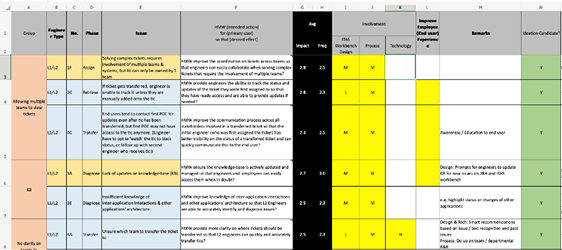
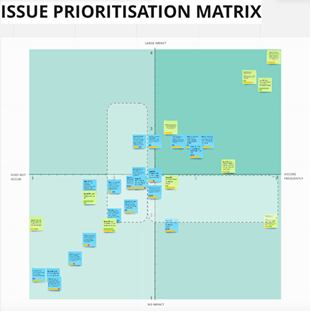
Thereafter, I conducted workshops with 20 engineers across 3 markets to validate the uncovered pain points, and to have them rate the impact and frequency of these pains.
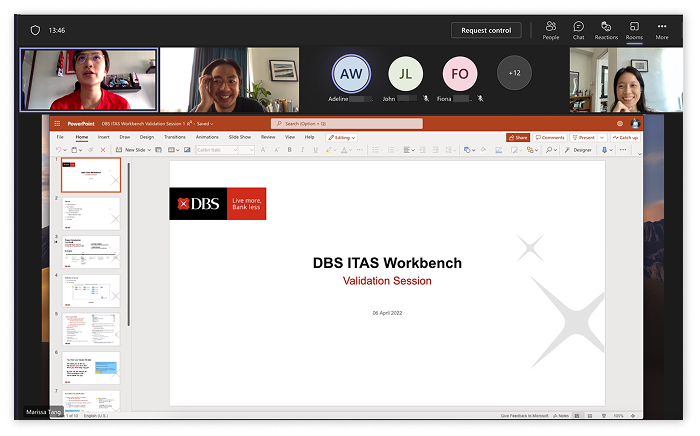
This enabled us to run a prioritisation workshop with the project stakeholders, to arrive at a view of the highest-priority pain points for the integrated tool to address.
3 · Develop
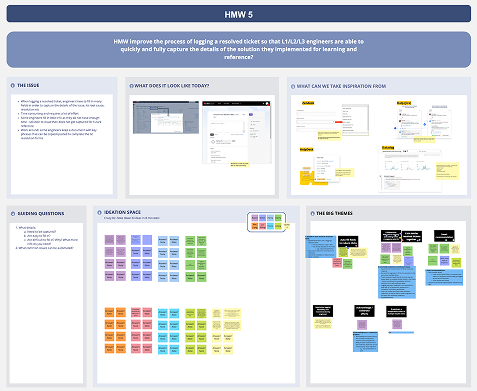
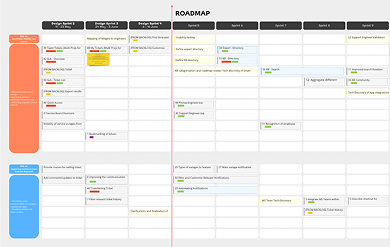
I ran remote ideation workshops with 20 participants from cross-functional teams across 4 markets, generating 60+ ideas. These were prioritised on implementation impact and effort, which allowed us to develop a holistic MVP roadmap covering the design, process and change management efforts needed to make the tool a working reality.
- 20
- participants
- 4
- markets
- 60+
- ideas generated
4 · Deliver
Working in an agile approach, I ran design sprints alongside daily stand-ups with the project team, weekly design reviews with the client’s design team, and biweekly sprint showcases. This gave us rapid, constant feedback, and let us raise and resolve questions quickly and iterate on designs swiftly.
The upshot
We were heartened when the client reached out some months later to let us know the project had been awarded the Singapore Good Design Mark 2023, in the Experience Design category.
Experience Design category.